Keep the heat out, whatever's inside.
Roof and wall insulation for poultry farms, warehouses, fulfillment centers, and any metal or tin shed structure. One method, built for the way sheds are actually built.
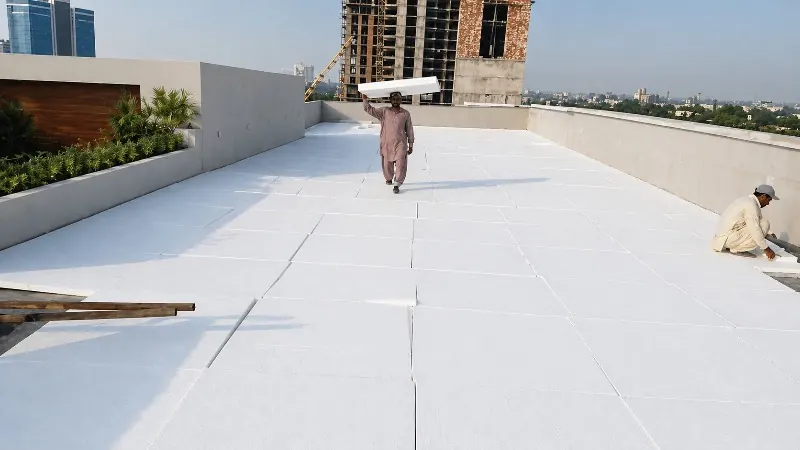
Where it's used
The same method works on any metal or tin sheet shed structure.
Poultry farm sheds
Roof and walls of open-sided poultry housing, built for the metal/tin sheeting these structures use.
Warehouses & fulfillment centers
Large metal-roofed storage and distribution facilities, protecting both the structure and what's stored inside.
General storage sheds
Any tin or metal-sheet shed structure where heat buildup is a problem.
What insulation actually changes
For livestock sheds specifically, heat management affects more than comfort.
Reduces heat stress
Lower roof and wall surface temperatures mean less thermal stress on birds and livestock inside.
Supports feed conversion
Animals under less heat stress spend less energy cooling themselves, which can support better feed conversion.
More stable shed environment
Reduces the swings in internal temperature between day and night.
Protects stored goods too
For warehouses and fulfillment centers, the same benefit applies to inventory sensitive to heat.
How it's installed
Same method for both roof and walls, designed specifically for metal sheet structures, not poured concrete.
Adhesive applied to the metal sheet
A special adhesive is applied directly to the existing metal or tin sheet surface.
TKG EPS sheets bonded in place
EPS sheets are bonded to the surface using the adhesive, roof and walls both.
Mesh wire laid over the EPS
A mesh wire layer goes over the EPS sheets for reinforcement.
Cement/sand render finish
A cement and sand mixture is applied over the mesh as the protective outer finish.
Every shed is sized differently
Density and thickness depend on your specific project, farm size, shed structure, and what's being protected inside. We recommend the right spec after a quick look at your setup, not a generic one-size-fits-all number.
Questions from farm and facility owners
Is it safe for the birds?
Yes. EPS is non-toxic and chemically inert, it doesn't off-gas or break down, and is widely used in food and agricultural settings.
Does it affect ventilation in the shed?
No. It's installed only on the roof and wall surfaces, it doesn't block any ventilation openings or fans.
How long does installation take on an active farm?
It depends on the shed size. Installation can be phased section by section to avoid disrupting the flock.
Will it work on my existing metal/tin roof shed?
Yes. Our adhesive, mesh wire and cement/sand render method is specifically built for retrofitting onto existing metal and tin sheet structures.
Can this be used for warehouses or storage sheds, not just poultry?
Yes. The same method works for any metal-sheet shed structure, warehouses, fulfillment centers, and general storage included.
Does it help with ammonia/humidity buildup?
Indirectly. By reducing heat load and stabilizing shed temperature, it supports a more stable overall environment inside the shed.
More general product questions? See the full FAQ page.
See the FAQs →Ready to protect your shed?
Send your shed size and structure, get a precise price on WhatsApp.