One material.
98% trapped air.
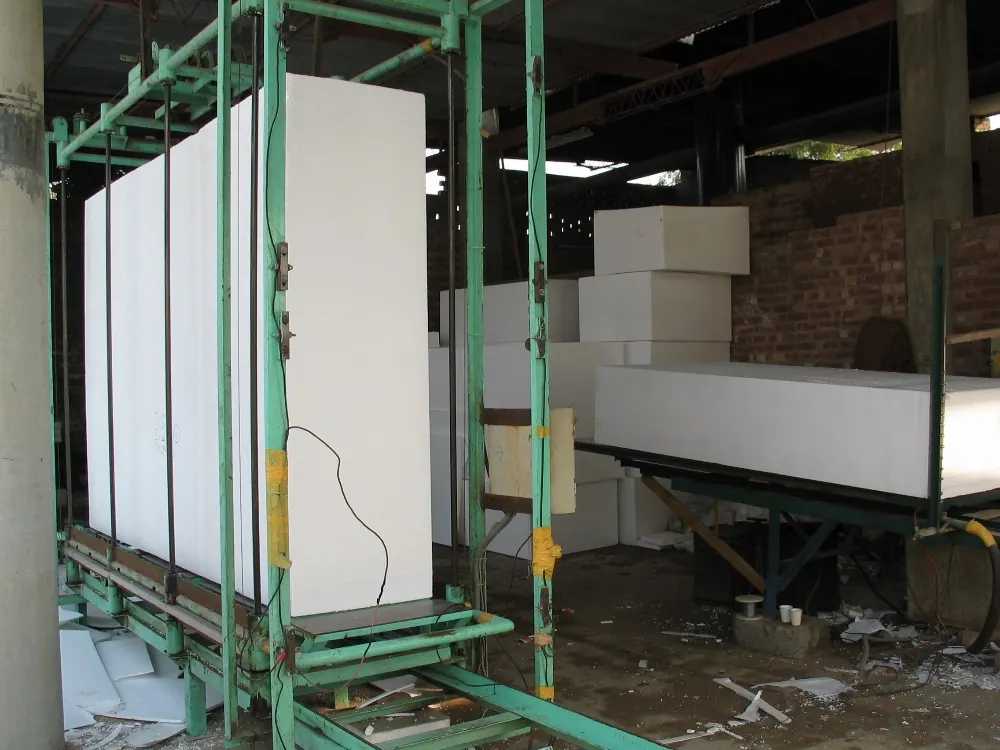
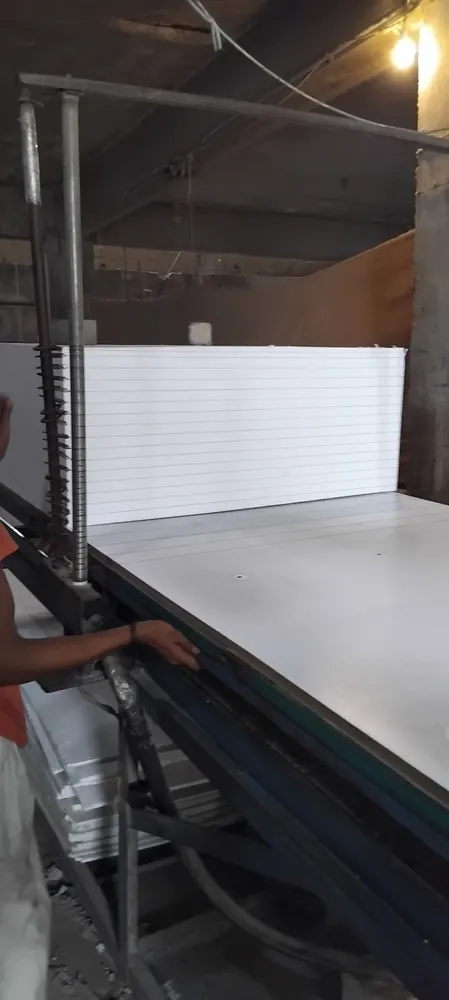
Expanded polystyrene (EPS), the same inert, food-safe foam used worldwide for building insulation and pharma cold chains. We expand, mould and cut it ourselves in Karachi, so the quality is ours to guarantee.
Halka, mazboot, aur barson tak chalne wala.
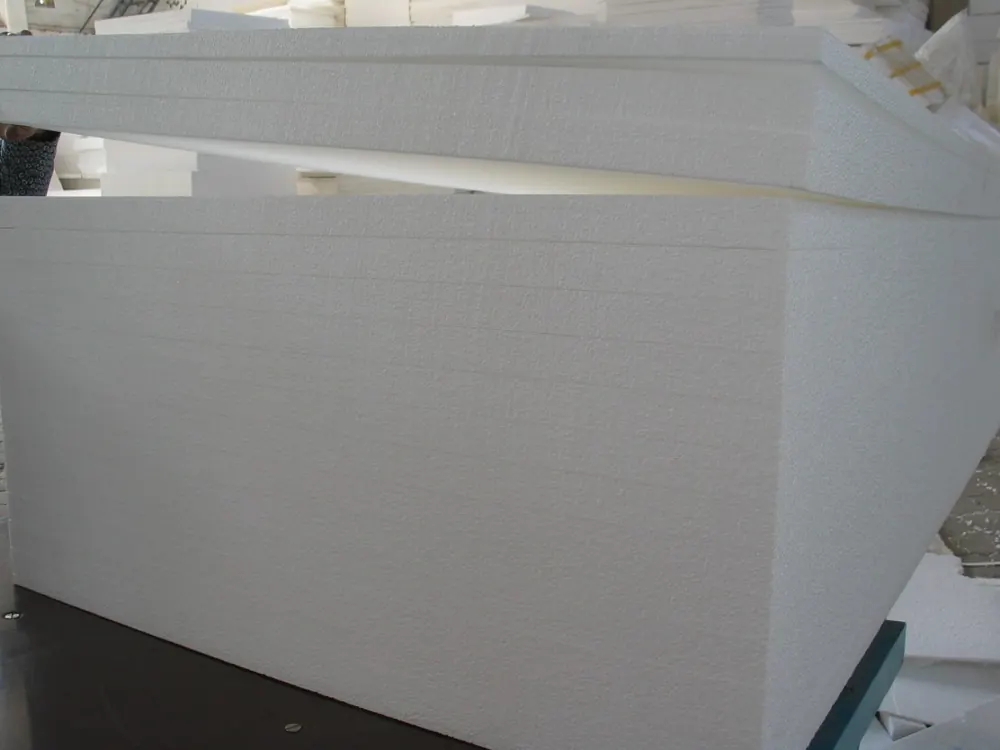
Density range
Lighter grades insulate; higher grades carry load (slabs, cold-store floors).
Thickness range
Any custom thickness, cut to your drawing.
R-value
Stable for 20+ years, keeps 94%+ after 15.
Sheet sizes
Standard and made-to-order dimensions from our Karachi plant.
Choose by the job, not the price tag
We never sell one grade for everything. The right density for your application is part of the free survey.
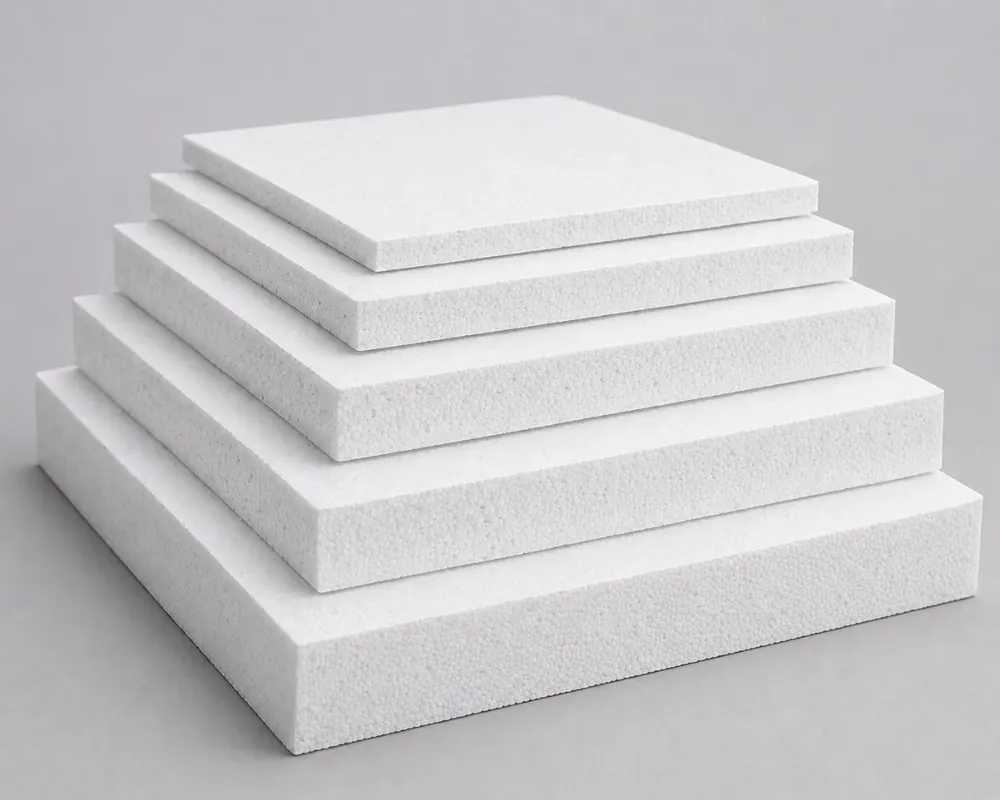
Available sheet sizes
These are our standard cuts. Anything outside this, tell us your drawing and we cut to size.
Why this material wins
The properties that make EPS the quiet workhorse of buildings worldwide.
Moisture resistant
Closed-cell structure shrugs off humidity, mould and salt air, Karachi-proof.
Chemically inert
No VOCs, no off-gassing, non-fibrous. Safe around kids, pets and asthma.
Featherweight
98% air. Adds almost no structural load, standard RCC roofs handle it easily.
CFC / HCFC-free
Made with ozone-safe blowing agents. Recyclable and non-toxic.
Dimensionally stable
Doesn't sag, settle or rot. The R-value you buy is the R-value you keep.
Cut on site
Lightweight enough to shape with a hot wire on the day. Fast, clean installs.
How EPS compares to XPS
Both are polystyrene insulation, made differently. Here's the honest technical difference.
For Karachi's climate and typical residential/commercial roofs and walls, EPS is the standard choice, delivering the performance you actually need at a lower cost than XPS for most jobs. That's why it's what we manufacture. Not sure which fits your project? Ask us on WhatsApp.
How ordering works
Message us on WhatsApp
Tell us your property type and rough area. No forms, just a chat.
We recommend the right density & thickness
Based on whether it's roof, wall, or cold storage, we tell you what actually fits, not just what's in stock.
Get a precise quote
Send your dimensions, we calculate the exact cost, no guessing.
Production & delivery
Cut to size at our North Karachi factory and delivered to your site.
Installation
Handled by our network of installation contractors, not directly by TKG. We'll help connect you.
Priced per square foot, by density
Total cost = price per sq ft × sheet area × number of sheets. Send us your dimensions on WhatsApp and we'll give you a precise, honest quote, plus the payback math so you can see it as the investment it is.
Get a quote on WhatsApp →Common questions about EPS sheets
What is TKG insulation made of?
Expanded polystyrene (EPS) sheets, 98% air trapped in polystyrene, making them lightweight and highly efficient. It's the same material used in food packaging, building insulation worldwide, and pharmaceutical cold storage.
What certifications does TKG have?
TKG meets international standards: ASTM C578 (rigid cellular polystyrene thermal insulation), ASTM D6817/D6817M (compressive strength) and ASTM D1621 (compression properties). All batches are tested and certified.
Is it environmentally friendly?
EPS is recyclable and non-toxic. We use CFC-free and HCFC-free blowing agents, so there's no ozone depletion. The material is inert, it doesn't off-gas or break down, and can be recycled or safely landfilled.
What's the difference between sheet densities?
Densities run from 10 to 32 kg/m³. Lower (10–16) is best for walls, mid-range (20–24) is best for roofs, and higher (24–32) offers the compressive strength needed for cold storage, freezer floors and load-bearing slabs. We recommend the right density for your application.
What's the difference between EPS and XPS insulation?
EPS is made from small foam beads fused together, XPS is one continuous extruded sheet. XPS has a slightly higher R-value per inch and better moisture resistance, but EPS covers a much wider density range for different jobs, roofs, walls, and cold storage all use different EPS grades. For Karachi's typical roof and wall applications, EPS is the standard choice.
More questions? See the full FAQ page.
Ready for a quote?
Send your dimensions, get a precise price on WhatsApp.