Thermopor, XPS
and PU panels.
Our insulation range on one page. EPS (thermopor) sheets and blocks made at our own plants, plus XPS boards and PU panels for the jobs that need them. Looking for packaging? See packaging moulds →
Halka, mazboot, aur barson tak chalne wala.
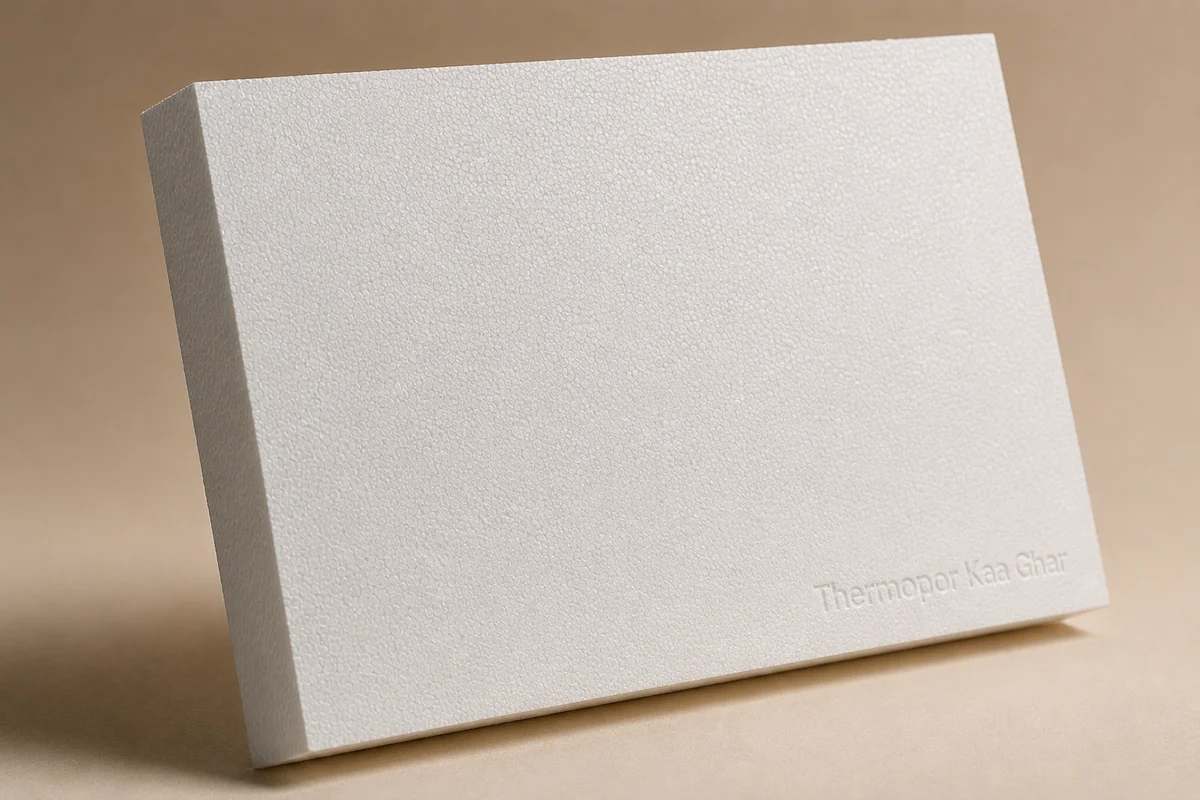
Thermopor sheets and blocks
Expanded polystyrene, 98% trapped air. We expand, mould and cut it ourselves at our own plants, so the quality is ours to guarantee.
Density range
Lighter grades insulate; higher grades carry load (slabs, cold-store floors).
Thickness range
Any custom thickness, cut to your drawing.
R-value
Stable for 20+ years, keeps 94%+ after 15.
Sheet sizes
Standard and made-to-order dimensions from our own plants.
Choose by the job, not the price tag
We never sell one grade for everything. The right density for your application is part of the free survey.
Available sheet sizes
These are our standard cuts. Anything outside this, tell us your drawing and we cut to size.
Different usages
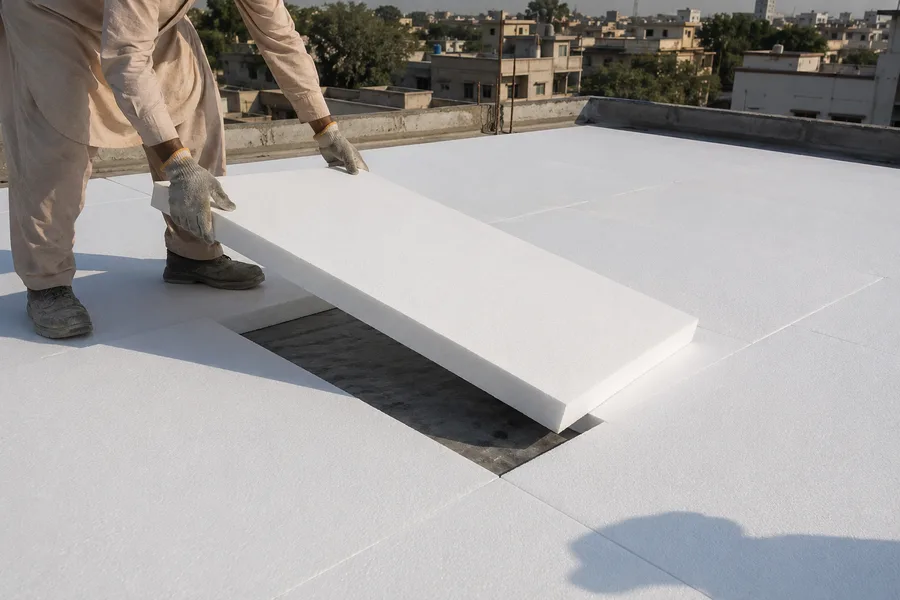
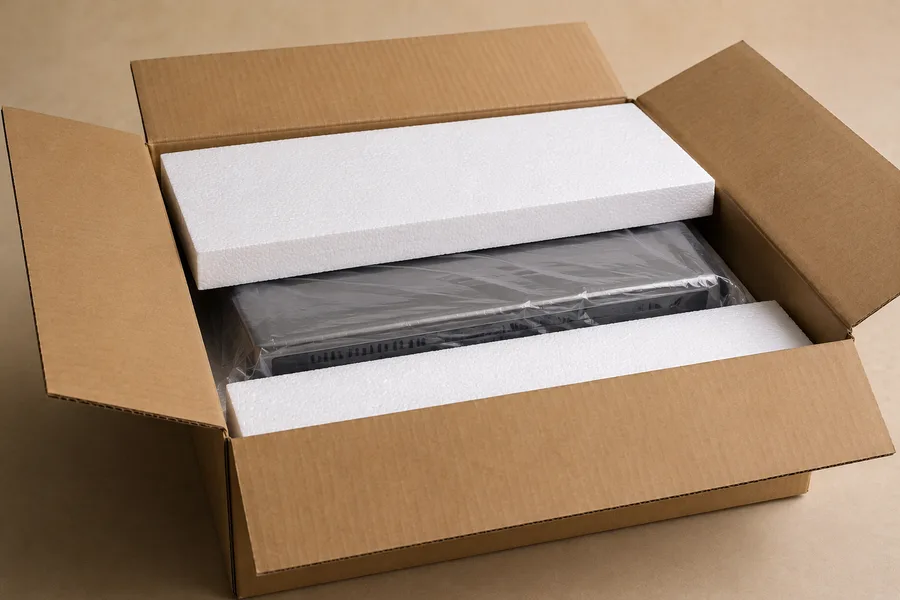
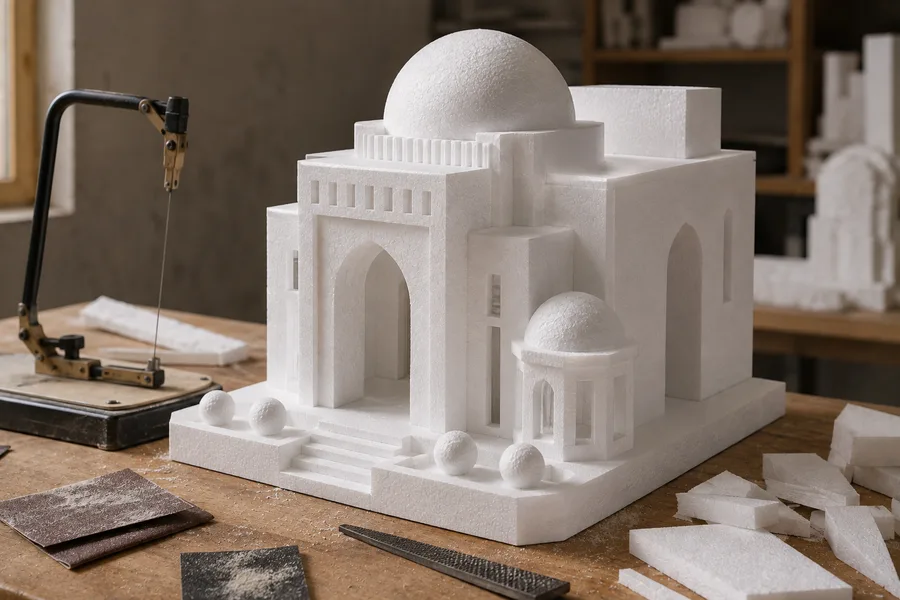
One material, several jobs, thermal insulation, protective packaging, and precision-carved display models.
Why this material wins
The properties that make EPS the quiet workhorse of buildings worldwide.
Moisture resistant
Closed-cell structure shrugs off humidity, mould and salt air.
Chemically inert
No VOCs, no off-gassing, non-fibrous. Safe around kids, pets and asthma.
Featherweight
98% air. Adds almost no structural load, standard RCC roofs handle it easily.
CFC / HCFC-free
Made with ozone-safe blowing agents. Recyclable and non-toxic.
Dimensionally stable
Doesn't sag, settle or rot. The R-value you buy is the R-value you keep.
Cut on site
Lightweight enough to shape with a hot wire on the day. Fast, clean installs.
XPS boards, built for the wet jobs
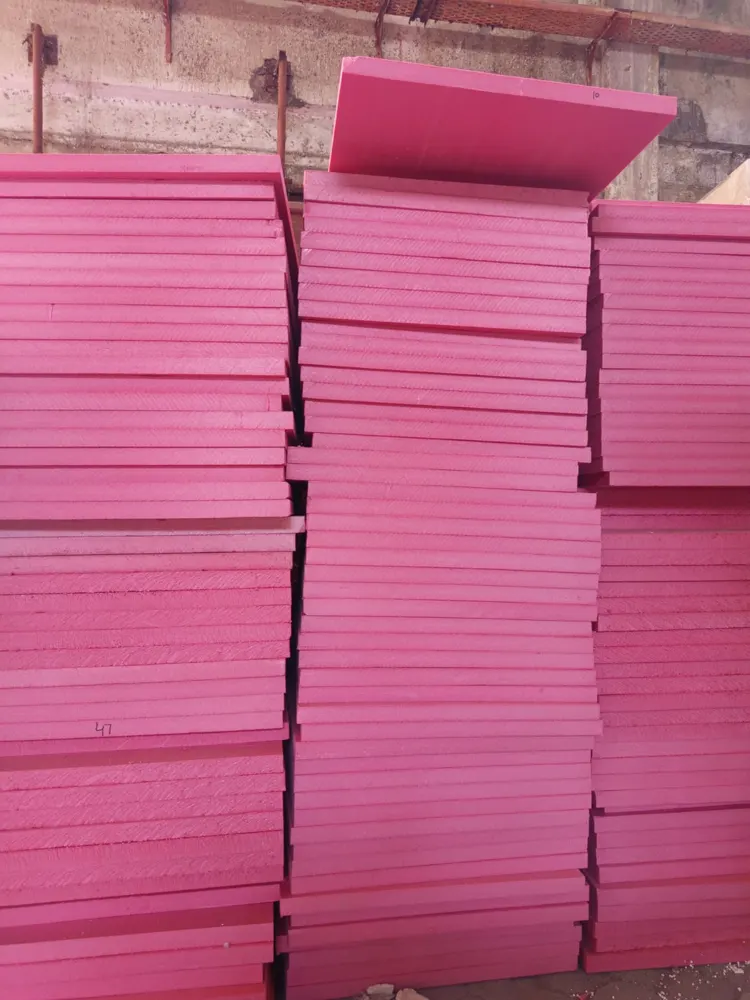
Extruded polystyrene (XPS) is one continuous closed-cell board. It shrugs off water and holds up under load, which makes it the right pick for foundations, floors, basements and roofs that stay wet.
Where XPS earns its place
Foundations & plinths
Board against the foundation keeps ground moisture and cold out of the structure.
Floors & basements
Under-slab and below-grade insulation where the ground stays damp all year.
Inverted roofs
Laid above the waterproofing, where the board itself has to live with water.
Cold room floors
Under freezer and cold room slabs, where moisture and load meet.
Wet walls & tank areas
Bathrooms, tank rooms and walls that see constant damp.
Podiums & terraces
Traffic decks and terraces that need insulation under the finish.
PU panels, maximum insulation in 2 inch
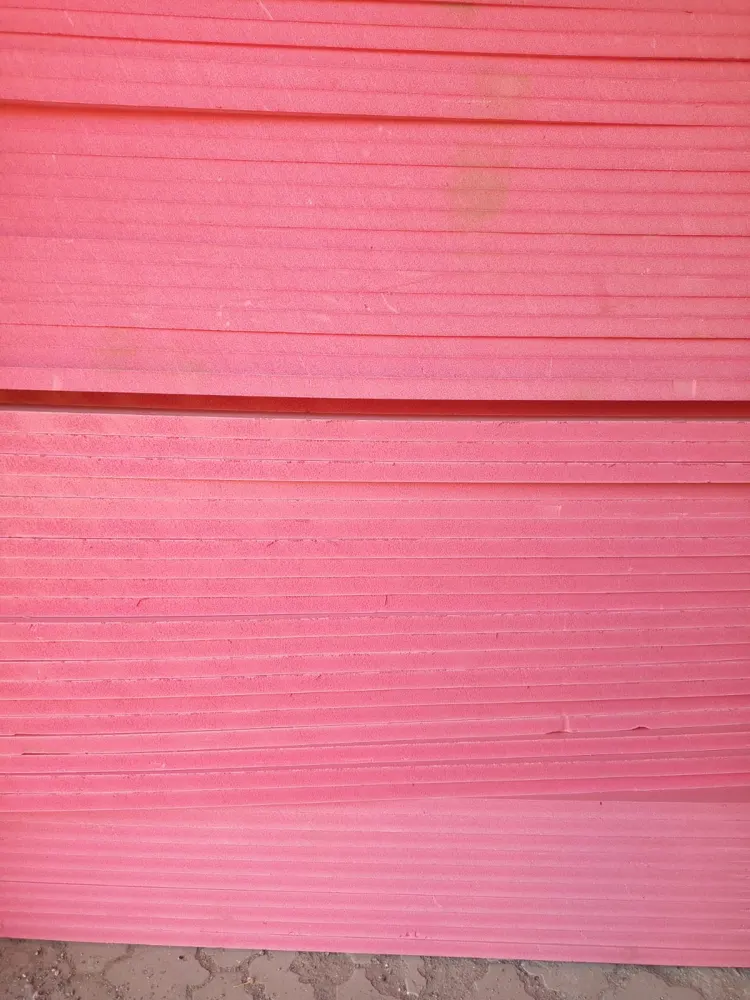
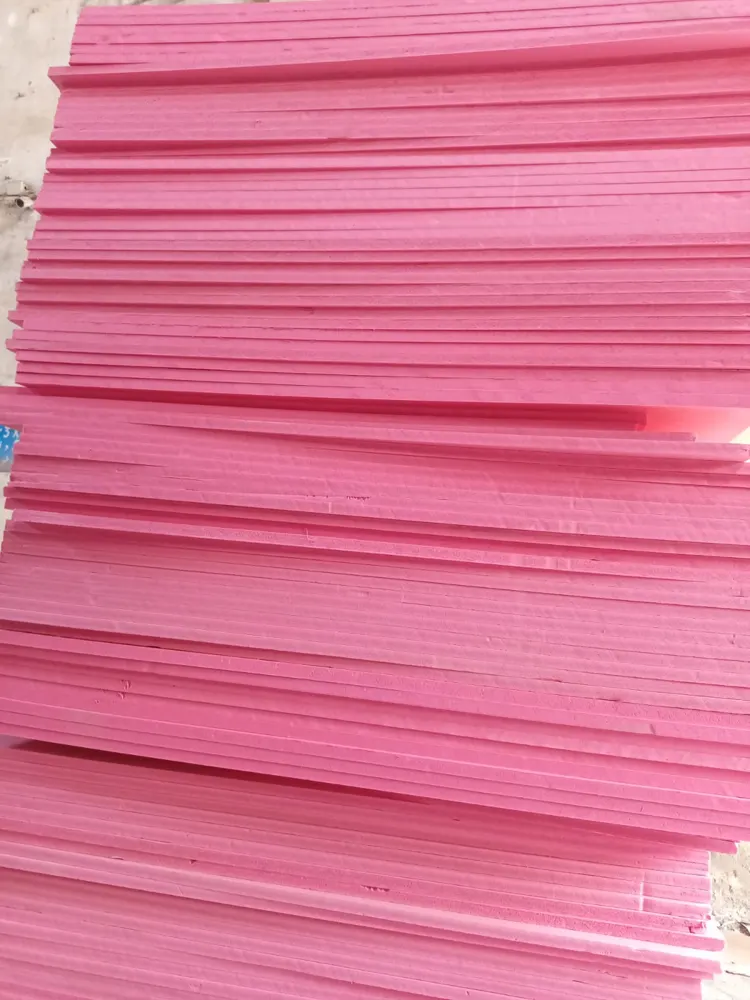
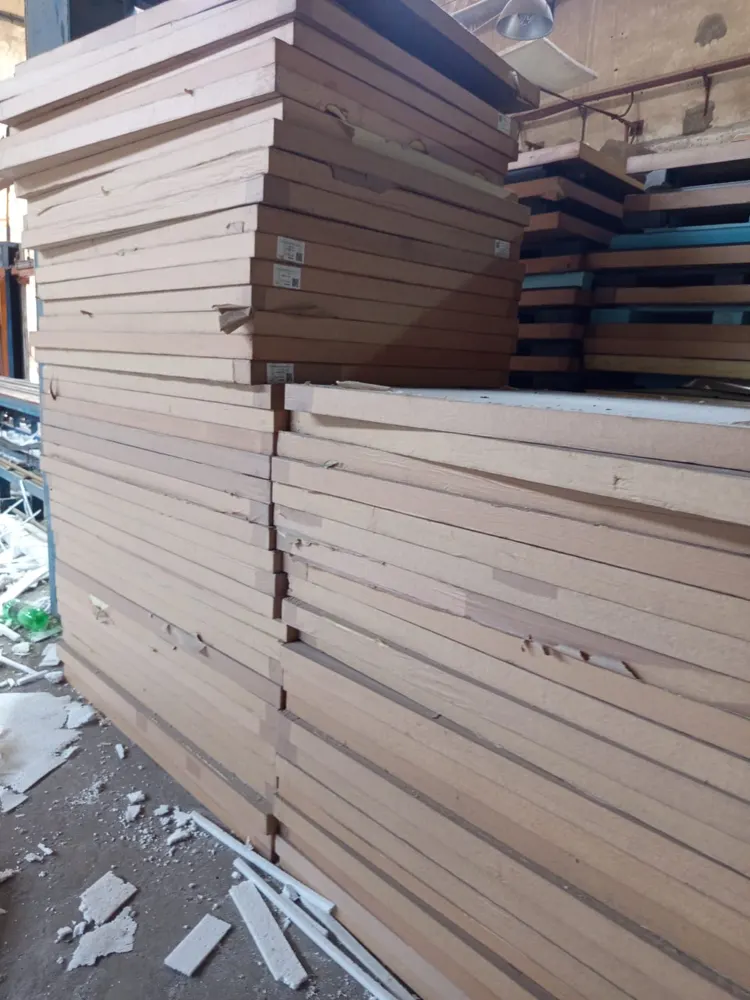
PU (polyurethane) panels give the most insulation per inch of anything we sell. Ours are 2 inch thick at 40 kg/m³, for roofs, walls, cold rooms and sheds where you want strong insulation without a thick build-up.
Where PU panels make sense
Cold rooms & freezers
High insulation per inch helps cold rooms hold temperature with thinner walls.
Roofs
Strong heat insulation on roofs where you cannot add much height.
Walls
Wall insulation where space is tight and every inch counts.
Poultry & dairy sheds
Roof and wall insulation for control sheds and farm buildings.
Warehouses & factories
Insulation for large roofs and walls that need to stay cooler.
Retrofits
Upgrading an existing building without a thick insulation layer.
Thermopor, XPS or PU: which one?
All three keep heat out. We make EPS and supply XPS and PU, so we recommend whichever fits the job.
R-values are approximate industry figures and vary by thickness and conditions. Not sure which fits your job? Ask us on WhatsApp.
How ordering works
Message us on WhatsApp
Tell us the product, your property type and rough area. No forms, just a chat.
We recommend the right density & thickness
Based on whether it's roof, wall, or cold storage, we tell you what actually fits, not just what's in stock.
Get a precise quote
Send your dimensions, we calculate the exact cost, no guessing.
Production & delivery
Cut to size at our own plant and delivered to your site.
Installation
Handled by our network of installation contractors, not directly by TKG. We'll help connect you.
How to work out your cost
Three steps, no guessing. Priced per sheet, by density.
Work out how many sheets you need
Take your total area (sq ft) and divide it by the sheet size. A standard 8×4 ft sheet covers 32 sq ft.
Round up
We don't sell partial sheets, so round up to the next whole number.
Multiply by the price
Number of sheets × price per sheet = your total cost.
Say you need to cover 1,000 sq ft using 8×4 ft sheets (32 sq ft each):
32 sheets × price per sheet = your total cost
Send us your area on WhatsApp and we'll do this math for you, plus tell you the right density for your project.
Get a quote on WhatsApp →Common questions about EPS sheets
What's the difference between sheet densities?
Densities run from 10 to 32 kg/m³. Lower (10–16) is best for walls, mid-range (20–24) is best for roofs, and higher (24–32) offers the compressive strength needed for cold storage, freezer floors and load-bearing slabs. We recommend the right density for your application.
What's the difference between EPS and XPS insulation?
EPS is made from small foam beads fused together, XPS is one continuous extruded sheet. XPS has a slightly higher R-value per inch and better moisture resistance, but EPS covers a much wider density range for different jobs, roofs, walls, and cold storage all use different EPS grades. For typical roofs and walls, EPS is the standard choice. For foundations, floors and constant-wet areas, XPS is the better pick, and TKG supplies both.
More questions, certifications, environmental safety, and more? See the full FAQ page.
See all FAQs →Ready for a quote?
Send your dimensions, get a precise price on WhatsApp.